Petrodollar System: Is Iran Challenging the 52-Year Oil Trade Rule?
- लिंक पाएं
- X
- ईमेल
- दूसरे ऐप
The Petrodollar System has dominated global oil trade for more than 50 years. However, recent discussions suggest that Iran may challenge the Petrodollar System by encouraging oil payments in Chinese Yuan through the Strait of Hormuz instead of US dollars.
Strait of Hormuz: Could Oil Trade Shift from the US Dollar to the Chinese Yuan?
A major shift in the global economy is being widely discussed. Reports suggest that Iran may introduce new rules for oil tankers passing through the Strait of Hormuz, one of the most important oil shipping routes in the world.
According to the discussion, Iran may allow oil shipments to pass only if payments are made in Chinese Yuan. However, shipments paid in US dollars could face restrictions.
If such a move happens, it could challenge the 52-year-old Petrodollar System that has dominated global oil trade since the 1970s .
.
What Is the Petrodollar System?
Today, most of the world’s oil is bought and sold in US dollars. However, this system did not always exist.
Until the early 1970s, the United States followed the Gold Standard. Under this system, the government could only print as many dollars as it had in gold reserves.
However, during the Vietnam War, the United States needed more money to finance its military spending. As a result, in 1971 the US ended the Gold Standard, allowing it to print dollars without direct gold backing.
The 1974 Petrodollar Agreement
After ending the Gold Standard, the US needed a way to maintain global demand for the dollar.
Therefore, in 1974 the United States reached an agreement with Saudi Arabia’s King Faisal.
Under this agreement:
Saudi Arabia would sell its oil only in US dollars
The United States would provide security protection and technology support
Saudi Arabia would invest its oil revenues in US Treasury bonds
This agreement eventually led to the creation of the Petrodollar System, which shaped the global financial order.
Why Did the US Dollar Become So Powerful?
Once oil started being traded globally in US dollars, every country needed dollars to purchase oil.
As a result:
Central banks around the world began holding large reserves of US dollars
Global demand for the dollar increased significantly
The United States gained strong influence over the international financial system
Additionally, the US could impose economic sanctions on other countries by restricting access to the SWIFT international payment system, making it difficult for them to trade oil in dollars.
Why Is the Strait of Hormuz So Important?
The Strait of Hormuz is one of the most critical energy routes in the world.
Key facts include:
The route is about 33 kilometers wide
Nearly 20% of the world’s oil supply passes through it
Every year, more than $1 trillion worth of oil trade moves through this narrow waterway
Because of this, any disruption or new rule affecting the Strait of Hormuz could have major global economic consequences.
What Happens If Oil Starts Trading in Yuan?
If Iran and its allies encourage oil trade in Chinese Yuan instead of US dollars, it could impact the global financial system.
Possible effects include:
The global dominance of the US dollar could weaken
Some countries may begin buying oil using Chinese Yuan
Demand for US Treasury bonds could decrease
The United States may need to refinance its debt at higher interest rates
Which Countries Could Be Affected?
Several major economies depend heavily on oil passing through the Strait of Hormuz, including:
China
India
Japan
South Korea
These countries also hold large reserves of US Treasury bonds. Therefore, any change in the currency used for oil trade could influence the global financial balance.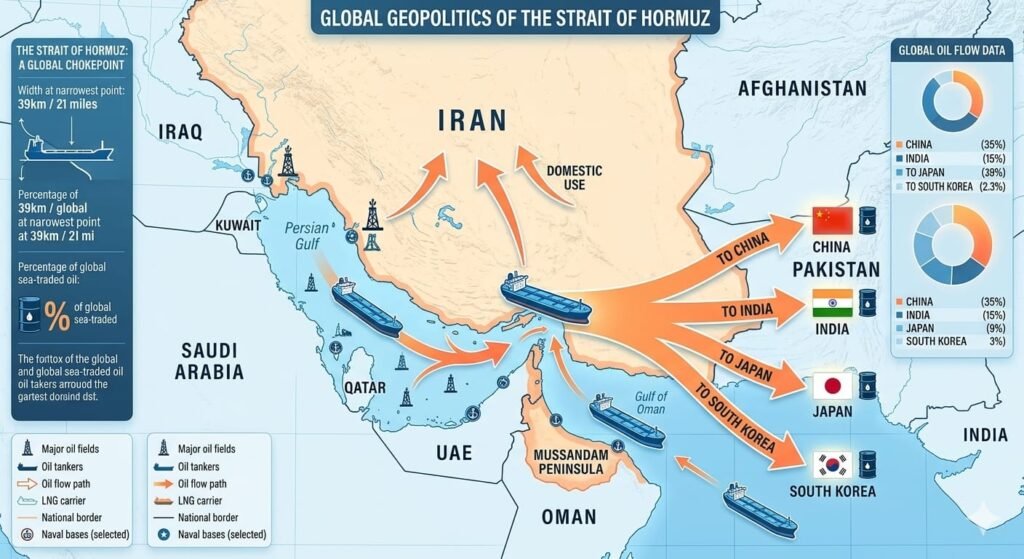
Is This a Challenge to the Dollar System?
Experts believe this situation is not only a geopolitical issue but also a financial power struggle.
If oil trade gradually shifts away from the US dollar toward other currencies like the Chinese Yuan, it could transform the global economic order.
However, such a change would take time. The Petrodollar System has dominated the world economy for more than five decades, and replacing it would require significant global cooperation.
Conclusion
Iran’s possible move is not just about oil shipments. It could influence the Petrodollar System, global financial power, and international trade dynamics.
If oil trade begins shifting from the US dollar to other currencies like the Chinese Yuan, it may reshape the global financial system that has existed for over 50 years.
The coming years will reveal whether the world continues to rely on the petrodollar system or moves toward a multi-currency global economy.
- लिंक पाएं
- X
- ईमेल
- दूसरे ऐप
.jpg)


टिप्पणियाँ
एक टिप्पणी भेजें